


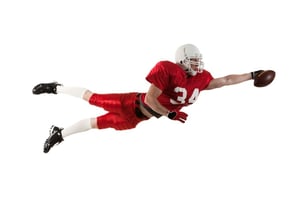
 There is no doubt that football is a high-impact sport that comes with the chance of injury. In fact, most people who play football will experience at least one injury in the course of their career. In addition to the contusions and other injuries that result from tackling, football players also risk damage to joints from overuse, pivoting, sprinting, and other types of motions. Some of the most common football injuries include:
- Knee injuries - Tears to the ACL, MCL, or meniscus
- Ankle injuries - Sprains and strains from quick cutting motions
- Shoulder injuries - Rotator cuff sprains from throwing and cartilage damage from impact
- Overuse injuries - Low back pain and knee pain are common complaints
- Muscular injuries - Sprains and strains in the groin, hamstrings, and quadriceps from not warming up properly

With football players exposed to so many potential injuries, it is important for coaches, trainers, and the athletes themselves to have a strategy for reducing pain and getting back in the game quickly and safely.
Alleviating Pain and Accelerating Recovery from Football Injuries
All trainers, and even most players, know that the first course of action after an injury to the muscles or joints is RICE (rest, ice, compression, and elevation). However, most players do not continue the treatment as recommended, and many trainers do not have the equipment they need to successfully deliver RICE therapy. Using a cold and compression machine can help solve both of these problems:
- Patient compliance - A cold and compression machine combines specialized wraps that conform to the body (knee, hip, ankle, shoulder, etc.) and integrated chambers that simultaneously pump cold water and pneumatic air. The result is a safe, comfortable method for delivering RICE therapy that athletes are more likely to use multiple times a day. Nobody likes holding an ice pack on their injury and static compression bandages can only do so much to reduce pain and swelling. Making treatment easier and more comfortable for athletes will accelerate the recovery process and reduce pain at the same time.
- Best possible treatment - Ice packs and static compression wraps are not always completely effective. As an ice pack sits on the skin it gradually gets warmer, decreasing the therapeutic benefit it delivers. On the other hand, a cold therapy machine maintains a constant temperature by circulating cold water through the body specific wrap via an ice reservoir. The result is longer-lasting and deeper-penetrating therapeutic cold.
Static compression bandages help prevent additional swelling, but they do little to proactively reduce it. A cold therapy machine actively pumps away excess fluid and replenishes oxygenated blood and nutrients to better reduce pain and swelling. The combined action of these two components -- consistent cold and active compression -- contributes to faster healing and less pain throughout the recovery process.
Professional football players are certainly not the only athletes who are exposed to potential risk of injury. Players at every level can benefit from having a way to quickly recover from injuries and reduce pain. If you want to learn more about how to get Game Ready for your high school, college, or professional athletic program, contact us today.
