How to Recover from Football Injuries

By Kelly Hansen | Jun 13, 2013, 12:00:00 AM

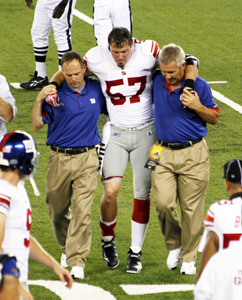
football injuryAthletes, coaches, and trainers have an interest in learning the best ways to quickly recover from football injuries. Players want to get back in the game as soon as possible; coaches need the whole team in top shape to be successful and trainers are tasked with keeping athletes in playing condition.

Football injuries can happen to ankles, legs, knees, and shoulders. Some of the most common football injuries include:
  • ACL and MCL tears

  • Torn meniscus

  • Ankle sprains and strains

  • Torn hamstrings

  • Contusions or "dead leg"

  • Tendinitis in shoulders and other joints

  • Shoulder dislocation or separation

Players suffer impacts from tackling, make quick turns that can damage joints, and put a lot of pressure on their bodies during games and practices. Even a minor sprain can slow a player down or take them out of the next game.

Use Cold Compression Therapy to Recover from Football Injuries

RICE (rest, ice, compression, and elevation) is a tried and true method for recovering from a range of football injuries, and it is almost always used as a first line of defense for reducing swelling and pain. However, even though this method has been used for years, it's not perfect.

Rest and elevation are elements of RICE that cannot be improved. The athlete simply needs time and patience during this part of injury recovery. However, the traditional methods for ice and compression leave room for improvement.

Ice therapy has two major flaws. The first is the risk of skin damage because if the ice pack is too cold, ice burn or frost bite can occur. The second is the inability to consistently cool the injured area. As soon as an ice pack is applied to an injury, heat is transferred from the body to the ice pack, causing the therapeutic cold temperature to increase and become less effective over time. A cold therapy system with Active Temperature Exchange technology ensures that a safe, consistent therapeutic cold temperature is provided for the duration of the application.

Static compression helps reduce swelling and edema, but these benefits can be taken to a new level with active compression. Pneumatic pressure in an active compression system mimics the body's natural muscle contractions, helping to increase blood flow and remove excess fluid from the injured area.

The time required to recover from football injuries varies significantly, but it can often be reduced with active cold and compression. Deeper, more consistent cooling helps facilitate the healing process so damaged tissues can repair themselves more quickly and injured players can get back in the game.

Game Ready’s wraps provide active compression and consistent cold to the entire injured area. Whether it's a sprained ankle, a damaged knee, or a shoulder injury, Game Ready is proven to be more effective than ice packs alone. Contact us today to learn more about how you can get Game Ready for your football team.

How many injuries does your football team sustain each season?

Download the Football Injury Guide

Amputation Rehabilitation: What To Anticipate The First Few Months

By Kelly Hansen | Apr 25, 2013, 12:00:00 AM


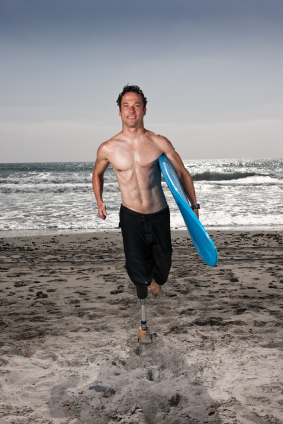
fully recovered amupteeAmputation rehabilitation is an ongoing process that is different for every individual. However, there are some common steps in the recovery process that every patient can expect to encounter. The emotional response to an amputation will vary, but the physical response is easier to prepare for, especially if you know more about what to expect in advance.

Amputation Rehabilitation: Week 1

The first week after surgery, the surgical site needs a lot of attention. At first the medical staff will change dressings, but in many cases they will show you how to do it yourself in preparation for leaving the hospital. The healing process is monitored closely and antibiotics are administered to prevent infection. You will also likely receive medication to help manage the pain immediately following amputation surgery. If you are experiencing phantom limb pain or intense emotions related to the loss of a limb, your doctor may recommend counseling.

Compression is a key component during this stage of the healing process because it helps to reduce swelling and prevents fluid build-up in the residual limb. Cold therapy may also be used to help manage pain and reduce the need for medication. 

Amputation Rehabilitation: Weeks 2-4

Physical therapy typically starts as soon after surgery as possible. Early in the process, gentle stretching is recommended to help improve blood flow and to maintain a healthy range of motion. You may also start to learn how to do daily activities such as dressing yourself, changing bandages, showering, and other skills that will allow you to be more independent.

You may also start practicing with an artificial limb as soon as ten days after surgery. The sooner you can get used to walking with an artificial limb, the faster the recovery process will be. 

Amputation Rehabilitation: Months 2-3

Your residual limb should be completely healed within a couple months, but rehabilitation does not stop when the surgical site is healed. Your residual limb will continue to change over time, which means that prosthetics must be re-fitted occasionally. You may also find that the use of a prosthetic limb causes swelling or irritation, especially during the first few months of use. Using cold therapy and active compression can help reduce pain and swelling; it also helps the residual limb maintain shape for a longer period of time.

Game Ready's new amputee wrap is designed to help speed the recovery process after a below-the-knee amputation. In the first weeks after surgery, the active compression pumps fluid away from the residual limb and promotes healthy circulation to help speed up the healing process. The consistent cold therapy also helps reduce pain and prevents secondary tissue growth. Talk to your doctor about getting a Game Ready system for your amputation rehabilitation process.

Download our free guide to amputee recovery for more helpful tips and advice.

amputee surgery recovery

Why Ice Water Therapy Alone Won’t Speed Up Muscle Recovery

By Kelly Hansen | Feb 14, 2013, 12:00:00 AM

ice water therapyCold (cryo) therapy is widely used after a musculoskeletal injury or post-surgery to decrease pain, muscle spasms, edema and swelling. Let’s say you’ve had an ankle or knee injury. You know the drill – get in bed or on the couch, elevate the leg and apply ice to the injured area. You also remember the mess and inconvenience this kind of ice water therapy causes – wet pillows, bedclothes, blankets, etc. Staying compliant with that type of cold therapy is really difficult and that’s just one reason why ice water therapy alone isn’t ideal for recovering from a sports injury.

What’s even more important to know is that using ice water therapy by itself versus combining it with compression is an area that’s been studied by researchers in the field of orthopedics, sports medicine and physical therapy. These studies consistently find that when a patient combines active cold therapy with active (sometimes known as intermittent) compression of the affected area, muscle recovery is accelerated. Why is this true? What clinical benefits does active compression offer to someone suffering from a sports injury?

Mimics natural muscle contractions

The use of active compression helps to more rapidly get rid of the edema that surrounds injured soft tissue. Edema is caused by protein leakage from capillaries due to inflammatory affects on the endothelial cells. Edema reduces the availability of oxygen to the tissue, which decreases the energy needed to push the accumulated fluid out of the cell and restore normal flow. Numerous studies have concluded that normal lymphatic flow is critical for faster healing.

Reduced scar tissue formation

When edema builds up and is not rapidly removed, it can cause scar tissue formation. Active compression helps with lymphatic drainage and restoration of normal functioning so long-term tissue damage is minimized.

Improved blood flow

Your soft tissues and muscles need blood, which carries critical nutrients as well as oxygen, to function properly and to heal. Active compression helps blood flow through the injured area more effectively by stimulating endothelial cell production of nitric oxide, a neurotransmitter that enhances the vascular tone of the affected injury site.

Enhanced tissue healing

Researchers have found that active compression seems to provide a therapeutic effect that speeds connective tissue healing. The external pressure that is cyclically applied causes increased arterial blood flow, decreases venous pressure and reduces the diminution of blood flow to the injured area. In plain English, this means that active compression appears to encourage the acceleration of the healing process.

The Best Approach: Active Cold Therapy with Active Compression

When active cold and compression therapy are put together in one synergistic, convenient system, the clinical benefits are amplified. The soft tissue-cold surface contact is enhanced because of the compressive action, which increases the degree of tissue cooling. This improves pain relief, speeds healing, and minimizes long-term tissue necrosis and scar formation.

Don’t rely on outdated and ineffective ice water therapy when you have a sports injury. Ask your doctor or physical therapist for the system that combines active cold and compression in one package, so you get your game back faster. What system would you rather use to recover faster? 


Cost of Cryotherapy

5 Things You Should Know About Rotator Cuff Surgery Recovery

By Kelly Hansen | Feb 4, 2013, 12:00:00 AM

rotator cuff recoveryThanks to surgical and physical therapy advances over recent years, rotator cuff surgery recovery won't keep you off the job or out of the gym as long as it once did. Rotator cuff tears are not uncommon in adults and are usually caused by acute trauma or repetitive overhead work such as painters or construction workers might perform. Once your physician diagnoses a tear and recommends surgery, you'll need to plan for a period of post-operative physical therapy. How long that therapy last depends on several factors:

  • the severity of your tear;
  • the type of surgery performed (open surgery requires longer healing compared to a minimally-invasive arthroscopic procedure);
  • your pre-surgical physical condition;
  • the type of cold and compression therapy provided by your physical therapist (PT) following surgery.

The last item is very important and one that you should proactively pursue with your PT. Cold (cryo)therapy is routinely used for rotator cuff surgery recovery because of its ability to reduce swelling and diminish pain. Compression therapy helps to restore normal physiologic processes in the damaged tissue more rapidly and speeds lymphatic drainage, which accelerates the healing process.

Here are 5 key things you should discuss with your surgeon and/or  PT so your rotator cuff surgery recovery proceeds as rapidly and successfully as possible:

1.    Not all cold and compression therapy is equal. Sure, if you want to go really old school, you can put crushed ice in a plastic bag or buy a bag of frozen peas and apply it to your shoulder. There are also systems that use ice water in a pad that's affixed to the shoulder with an elastic compression wrap, as well as devices that continuously circulate cold water through pads affixed with elastic wrap.

2.    Comparative studies have shown these solutions to be less effective than a more advanced system that delivers both cold and compression therapy in an ergonomic wrap that's especially designed for delivering targeted shoulder therapy.

3.    Though static compression is an effective way to reduce swelling, intermittent compression therapy is better for also optimizing lymphatic drainage. Active compression is especially helpful when a patient is not able to generate rhythmic muscle contractions that help stimulate tissue recovery.

4.    Using a system that combines cold and intermittent compression therapy has been shown to reduce the number of post-surgical PT visits required. This means lower costs are incurred for therapy and a quicker return to normal functioning.

5.    Post-surgical pain and the use of pain medication is an important issue for physicians and patients. Physicians want to make sure their patients don't become dependent on pain medication; patients want faster relief and the ability to function without being under the influence of powerful pain meds. Using a combined cryotherapy and intermittent compression system has been shown to improve short-term pain relief and reduce the use of pain meds. One patient who had undergone 2 prior shoulder surgeries before using this system after his third surgery found it helped reduce his pain and bruising and led to a faster recovery.

Don't be satisfied with 20th-century cold and compression technology for your rotator cuff surgery recovery. Ask for the system that's used by professional athletes as well as regular folks who want to get back to work as fast as possible. How can we help?


Cost of Cryotherapy
COMMENTS

All content found on this website, including text, images, audio, or other formats were created for informational purposes only. The Content is not intended to be a substitute for professional medical advice, diagnosis, or treatment. Always seek the advice of your physician or other qualified health provider with any questions you may have regarding a medical condition or treatment. Never disregard professional medical advice or delay in seeking it because of something you have read on this website

Stay up-to-date on the latest injury & post-op recovery trends by subscribing to the Game Ready blog.
Subscribe