Time Trial Cooling with Levi Leipheimer

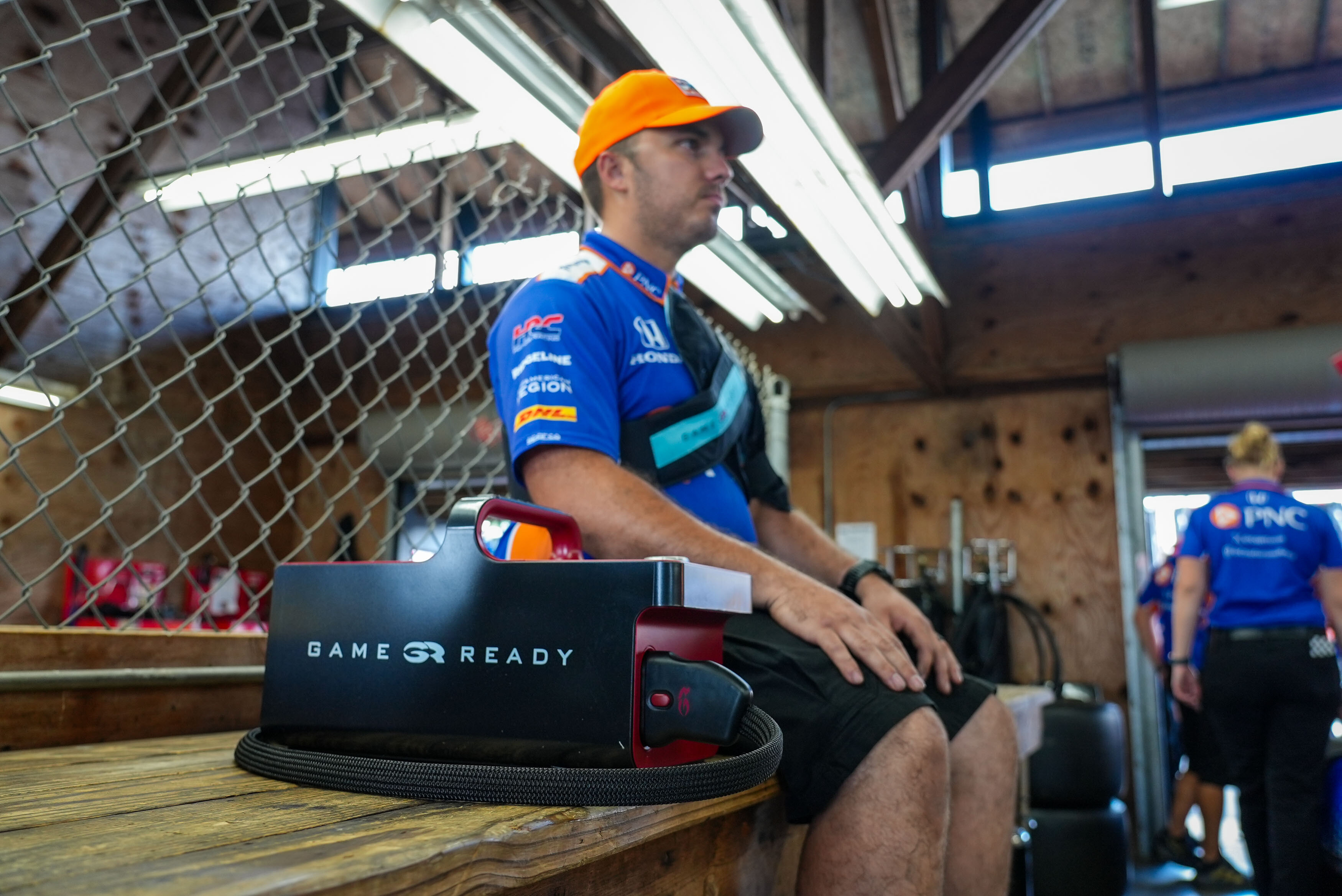
Levi Leipheimer of Team RadioShack takes Game Ready for a spin.

Tags: ,
Posted in News by Team GR. No Comments

Allen Lim on Game Ready #4

We don’t know why our bodies need sleep, but we do know sleep is critical. In fact, sleep is an essential ingredient to physical recovery. Allen Lim and Team RadioShack are monitoring the sleep patterns of Tour de France athletes to learn more.

Tags: , ,
Posted in News by Team GR. No Comments

Allen Lim on Game Ready #3

Proper nutrition and hydration are absolutely critical to elite and recreational riding preparation, on-bike performance, and recovery. Allen Lim from Team RadioShack tells you how listening to your body is key.

Tags: , ,
Posted in News by Team GR. No Comments

Game Ready Featured on Versus TV

Check out this Versus TV segment. In a special “Technology of the Tour” feature, Dr. Allen Lim of Team RadioShack talks about Game Ready’s cutting-edge system and solutions.

Tags: , ,
Posted in News by Team GR. No Comments

Allen Lim on Game Ready #2

Cooling down while warming up? For riders on the pro tour, it’s a science. Learn some of the tricks from Allen Lim, Sports Physiologist for Team RadioShack.

Tags: , ,
Posted in News by Miranda Coykendall. No Comments

If You Can’t Take the Heat…

High temperatures can be a harsh, although unseen, competitor for any endurance athlete and this is especially true for the cyclists in the Tour de France. This July, temperatures have been consistently soaring into the high 80s and above, and the summer humidity is unforgiving. But the race must go on, and there is no way to avoid these harsh conditions.  If an athlete has to compete in hot temperatures, then the best they can do is work around them.

Humans are pretty remarkable because of how adaptable we are.  One key skill that these Tour de France athletes employ is our ability to acclimatize. Acclimatization is essentially adapting to a new climate by exposing yourself to it for an extended period of time.  For athletes to acclimatize to the high French July heats, they must incorporate this heat into their training. Those who take the time to acclimatize will have a serious advantage over their competitor; they will have a lower heart rate, salt content in their sweat, core temperature, and sweat rate.

In hot temperatures, our bodies speed up blood flow to bring the heat to the surface of our skin which will then transfer it into the air.  The most effective cooling for our bodies is through sweating (heat is removed with evaporation of sweat). The effectiveness of sweating is greatly affected by humidity. In a dry environment, sweat evaporation is no problem, but when it’s humid, the air is already saturated with water, and can really limit sweat evaporation.

Team RadioShack is taking a proactive approach to staying cool when the mercury rises. They are utilizing Game Ready technology to keep their core temperature lower during warm-ups which allows a longer time to fatigue (better performance!) and helps the riders sleep by cooling them as their heads hit the pillow each night. Out on the roads, team scientist Allen Lim is making sure each rider stays cool in the saddle with specially formulated slushees that keep them hydrated and cool. For athletes, water is not enough. Sodium and potassium (key water balance electrolytes) are needed to pull the water into the blood (reduces blood viscosity and is crucial for thermoregulation and metabolism). When adjusting to higher heats, sodium, chloride, potassium, and magnesium are the most crucial electrolytes to replace. This is because when we sweat, we lose these minerals along with water.

For those especially hot days, Lim provides the riders with pantyhose filled with ice to place down the backs of their jersey. A simple, but very effective, cooling method!

Photo Credit: Glenn Kasin

To properly train for a high-temperature competition, follow these basic guidelines:

  1. If you can’t get out to your racing location a few weeks early to adjust, mimic the environment you expect to be racing in at home. If it’s like the conditions at this year’s Tour, train outdoors during when the sun is shining and radiating off the asphalt. If you predict there won’t be much wind, wear extra layers to reduce air flow over your skin. Get creative!
  2. Slow down! When you first start training in these warmer elements, reduce the training volume and intensity so you don’t hurt yourself.
  3. As you start to adapt to these higher temperatures, start increasing the volume and intensity again.
  4. But keep tabs on how you feel! Your body mass, hydration rate, and other physical indicators must be monitored through the heat training phase.
  5. And throughout all of this, drink, drink, drink an electrolyte beverage! Take care to ensure that proper hydration is maintained.

Thanks to Dr. Stacy Sims for her contributions to this post

Tags: , , , ,
Posted in News by Miranda Coykendall. No Comments

The Ins and Outs of Eating and Sleeping on the Tour

It sounds impossible, but for the month of July the competitors in the Tour de France will have to eat a ridiculous amount of food, roughly 6,500-9,000 calories a day, depending on the difficulty of that day’s route, as compared to the approximate 2,500 a normal male takes in.  That’s 17 Big Macs or almost four days worth of food crammed into one day!

Eating like this takes careful planning. Riders get up for a calorie-loaded meal at least 3 hours before race time.  It is important that the riders stay nourished throughout the day, even while on their bikes. This means staying hydrated and continuing to eat – even when they don’t always feel hungry. Race stages actually have feeding stations for this very purpose (one or two per stage, depending on the length) where riders can refuel without ever hopping off the bike.

To stay energized, cyclists on the Tour keep their diets mixed with different sources of fuel, as the macronutrients (carbohydrates, fats, protein) all contribute to muscle metabolism at different times and in different ways. The primary source of immediate fuel is carbohydrates, which are used quickly and have to be constantly replenished. By adding a bit of monounsaturated fats and protein, the cyclists will have the right mix of fuel to keep blood sugar levels even (preventing the bonk!) and allow their bodies to keep racing over long hours.

The actual racing part of the Tour only lasts 4-6 hours a day, which leaves plenty of time for food and rest/recovery.  Competitors stay in hotels along the route, and need to unwind after the race so they can get to sleep, which is essential for recovery.  For athletes on the Tour, quality of sleep as well as amount of sleep is crucial for performance.

France is hot and humid during the summer, and a sticky sleep is far from the comfort athletes need for effective recovery. People sleep better if they are in a cooler, thus more comfortable, temperature – somewhere between 65 and 72 degrees Fahrenheit. For many riders on the Tour, this can be harder than it sounds, since many of the older hotels do not have air conditioning systems. As a result, cyclists often have to take matters into their own hands. Team RadioShack is utilizing cooling technology throughout the Tour, from pre-race warm-ups to when their heads hit the pillow at night. For those who don’t have access to a Game Ready system, try placing your hands and feet in cool water for ten minutes or so before bed. Keeping a glass of ice water on the nightstand is another (refreshing!) way to keep your body temperature low.

Still having trouble? Consider taking 3mg of melatonin, which occurs naturally in your body, to help get your sleep cycle back on track. Keep the room cool, quiet, and dark and you’ll sleep like a baby.

Thanks to Dr. Stacy Sims for her contributions to this post

Tags: , , , , ,
Posted in News by Miranda Coykendall. No Comments

Recover Quickly the Right Way

Whether you are spending six hours in the saddle each day on the Tour, or training for your first half-marathon, recovering in between work outs is essential to repair muscle, reduce fatigue, limit soreness and achieve your potential. Here are some do’s and don’ts on how to recovery the right way.
Do: Use Hot/Cold immersion therapy (aka contrast bath therapy) after a race. Alternate between warm water immersion (legs only are fine!) to cause increased blood flow to the legs (vasodilation) and cool water immersion to reduce inflammation (vasoconstriction). This therapy can also be used to reduce swelling around injury as well.
Don’t: Use just a bag of ice. This will only affect skin temperature and cause vasoconstriction which may reduce your body’s ability to offload heat (keeping your core temperature high).
Do: Take advantage of the first 30 minutes after your work out. The first 30 is the most crucial period for recovery: you want to shut down the catabolic effects of exercise and start the repair process as quickly as possible. One of the most effective means to achieve this is to ingest a 4:1 ratio of carbohydrate/protein (lowfat chocolate milk is the best recovery drink available!).
Don’t: Force yourself to sleep. After a long workout the metabolism is often working over time, raising an athlete’s core temperature, making it harder to sleep. Tylenol PM is not the answer! Try putting your hands and feet in cold water to help relax before trying to sleep. On the Tour for example the athletes actually use cooled sleep pads to help rest at night.
Do: Get Vitamin D. Vitamin D comes naturally from the sun, but by wearing sunscreen and clothing, you reduce the amount of Vitamin D your body can synthesize from the sun. Eat plenty of vitamin D rich foods (fortified lowfat/nonfat dairy products, salmon, whole eggs). You may also consider supplementing with a Vitamin D3 supplement (note: not Vitamin D2) to help meet the 2000IU daily recommendation.
Don’t: Ignore this advice! The recovery can almost important as the training – and not recovering right puts you at greater risk of injury. Be sure to include the 30 minutes of dedicated recovery into the total time of your work out as stretching alone is not enough to protect your muscles and reduce your fatigue.

Tags: ,
Posted in News by Miranda Coykendall. No Comments

Allen Lim on Game Ready #1

Allen Lim, Sports Physiologist for Team RadioShack, talks about innovative cooling technologies, injury treatment, and the performance of pro riders on the 2010 Tour de France.

Tags: , ,
Posted in News by Miranda Coykendall. No Comments

Peloton? Domestique?? Cycling Terms Defined

For many, the Tour de France or any cycling race may be fun to watch, but a bit confusing when it comes the terminology. For the potentially confused, check out the guide below, listing ten of the more common terms you are likely to hear throughout the Tour.

1) Prologue: Opening stage of the Tour.

2) Time Trial: Event where cyclists start at different times and race individually against the clock. In team time trials, the entire team races against the clock. For the purpose of the Tour de France, time trials are individual and offer the riders an opportunity to make big moves up or down in the overall standings.

3) Peloton: The main pack of riders in a cycling race. One of the more common terms you will hear throughout a race.

4) Slipstream: Technique used by cyclists to reduce the drag as they ride in a large pack. This can also be referred to as “drafting” where each cyclist in the tightly packed peloton drafts off the riders in front of them to conserve energy.

5) Domestique: A member of the cycling team whose main purpose is to ensure its team leader gets on the podium. These cyclists are focused on the team rather than their individual results. In addition to bringing food and water from team cars, shielding the team’s main rider(s) from opponents, and helping with mechanical issues such as flat tires, they can create a breakaway to force a chase from the other teams. On the same note, they can provide a lead out, allowing their team to gain better positioning for key sections of a stage race.

6) Soigneur (swan-yer): Team assistants, responsible for making sure cyclists are prepared for a race. They pack the team’s bags, prepare food, handle accommodations, escort the riders and provide massages after long rides or races. Not glamorous, but extremely important.

7) White Jersey: Awarded to the leader of the young riders standings at the end of each stage. How young? Riders must have been born after January 1, 1984 to be eligible.

8) Green Jersey: Awarded to the top point leader at the end of each stage. This is generally the “sprinter’s jersey” as intermediate sprints throughout a stage can earn these riders points.

9) Polka Dot Jersey: Awarded to the “King of the Mountains” or KOM, determined by which rider reaches the top of a mountain first. Like the sprinter’s and the green jersey, there are different point classifications for these riders at different mountain tops.

10) Yellow Jersey: Awarded to the overall leader of the race at the end of each stage. The winner of the Tour de France will be awarded the yellow jersey at the end of the Tour. For obvious reasons, this is the most coveted jersey of the Tour.

Tags: , , ,
Posted in News by Miranda Coykendall. No Comments